
Dirt Hauling & Earthwork Contractor in Houston, TX
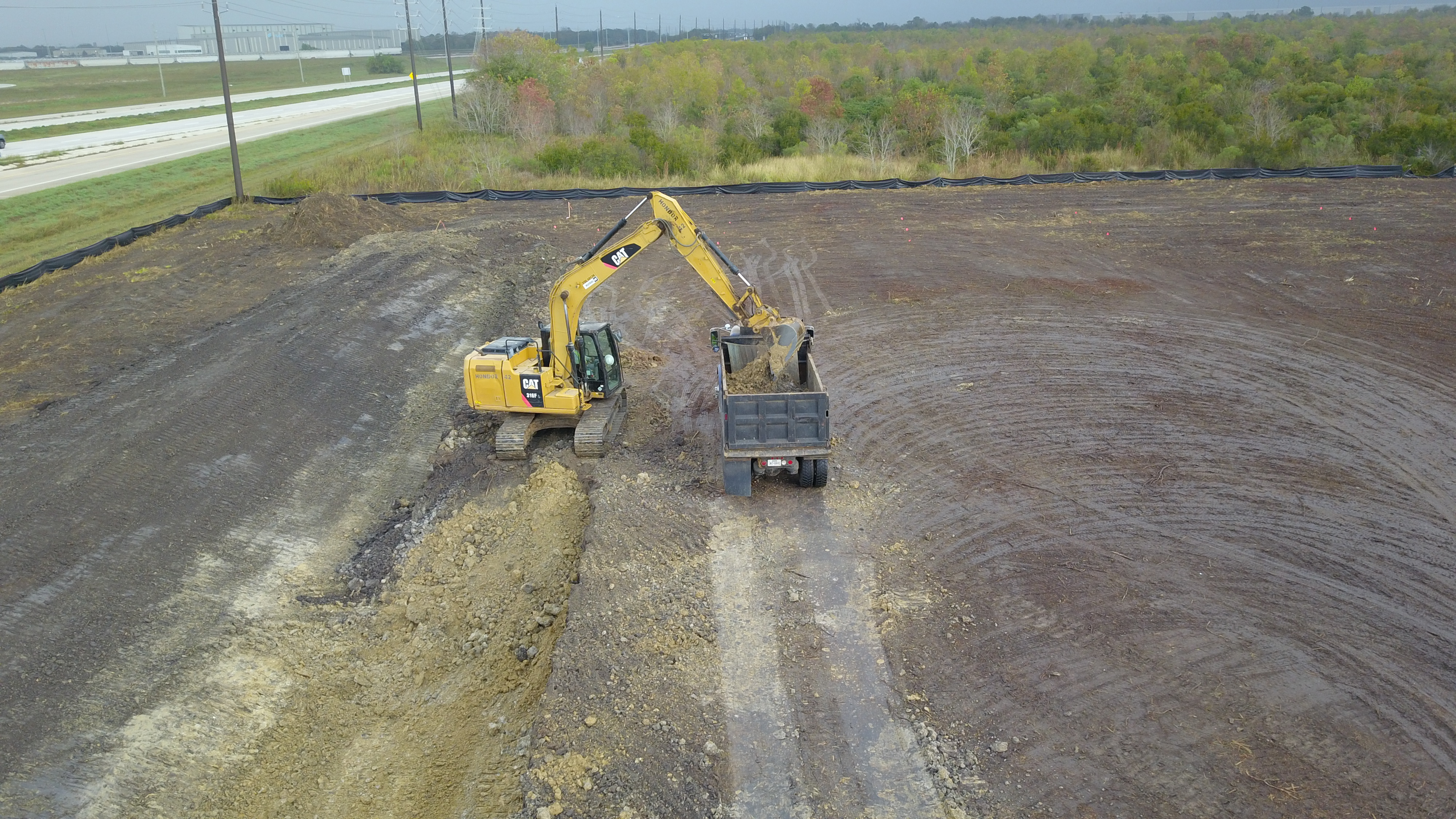
Owned trucks and owned iron, so the dirt moves when the schedule needs it to — not when a hauler has capacity.
Earthwork looks like the simplest scope on a commercial project and is routinely the one that breaks the schedule. Haul capacity disappears when the region is busy, import fill gets expensive with no warning, and a site that cannot get trucks cannot start anything else.
We carry our own fleet and our own excavation equipment. That converts hauling from a market-rate gamble into a scheduling decision — when a pad has to be ready by a date, the trucks are ours to assign.
The same capacity backs every other division: site work, concrete and building pads all draw on it.
What's included
Excavation & hauling
- Mass excavation and cut/fill balance
- Export haul-off and spoil disposal
- Select fill and structural fill import
- Base and aggregate delivery
- Fleet-backed trucking capacity
Site preparation
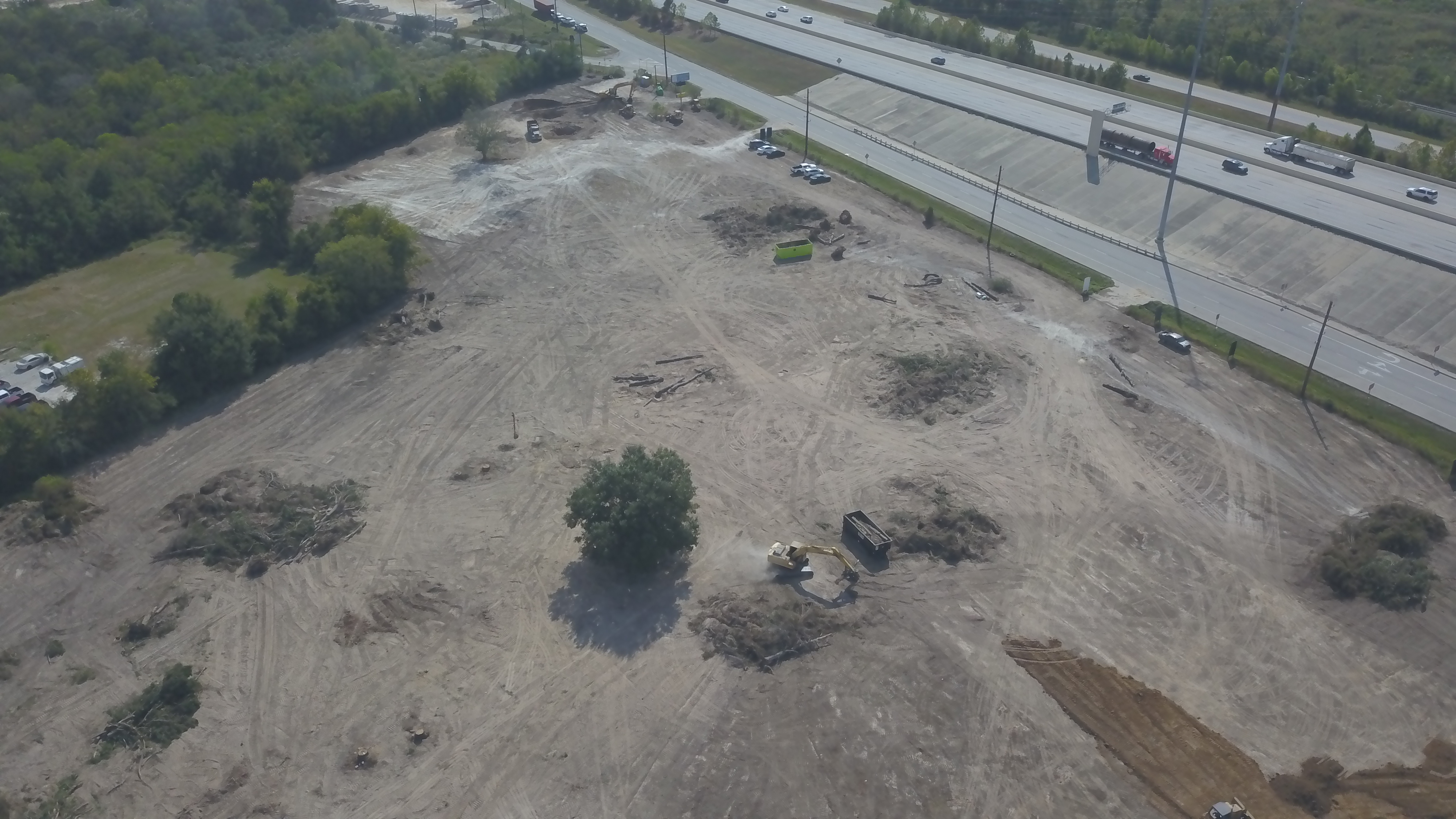
- Clearing, grubbing and stripping
- Building and equipment pads
- Compaction to spec with testing
- Rough and fine grading
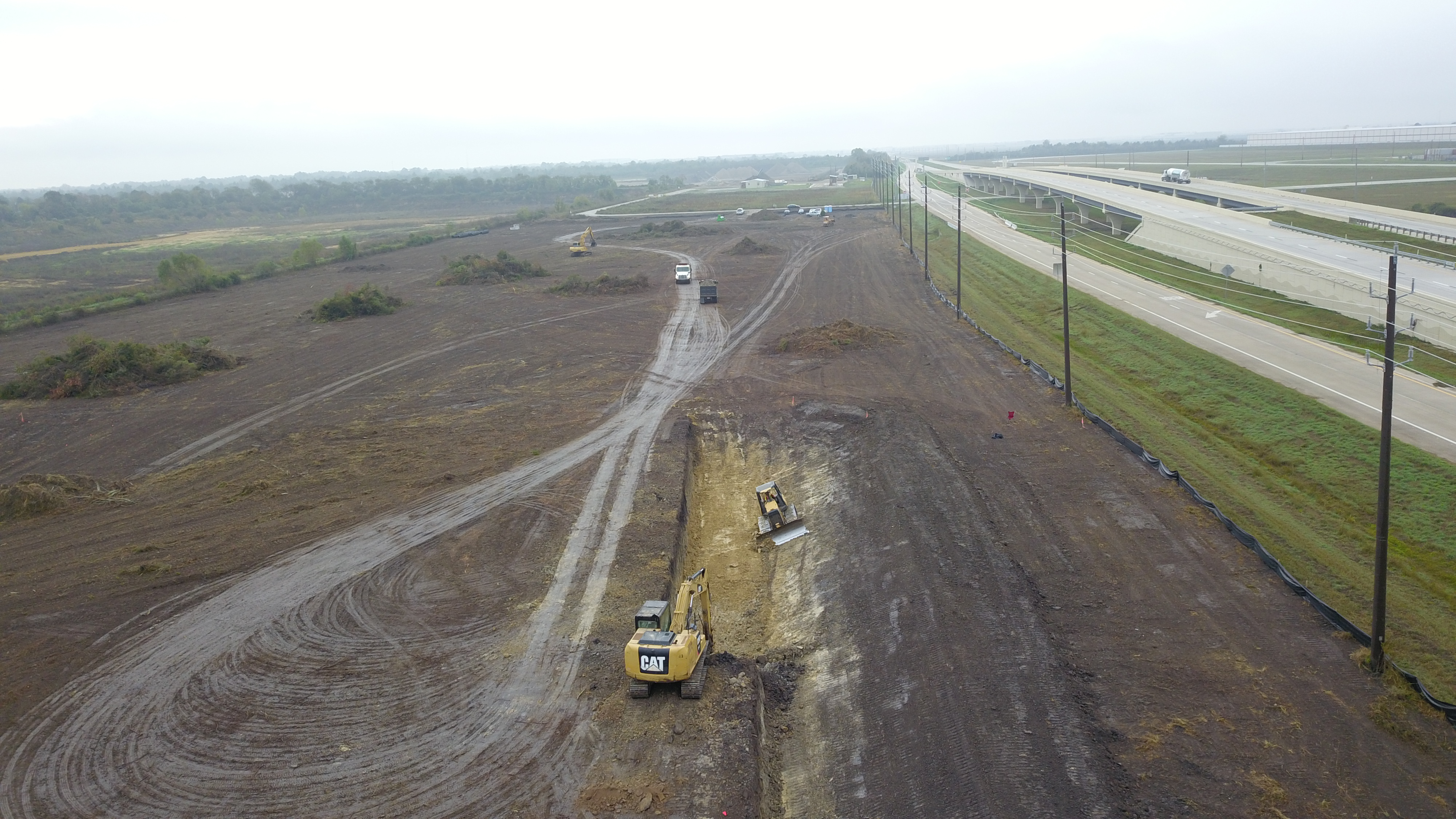
- Detention pond excavation
Material supply
- Select fill and clay
- Sand, base and crushed material
- Topsoil supply and placement
- Rip-rap and erosion material
- Coordinated delivery scheduling
Cut and fill balance is the real cost lever
Every cubic yard that leaves a site costs twice — once to load and haul it away, and again if fill has to be imported later. The largest savings in an earthwork package almost always come from balancing the site rather than from a lower per-yard rate.
That means looking at the grading plan early, while pad elevations can still move a few inches, and asking whether the design is fighting the existing topography for no real benefit. A small adjustment at the design stage can remove hundreds of truckloads.
Owning the fleet changes the schedule
When Greater Houston is busy, hauling capacity is the first thing to disappear and the last thing to come back. Projects that rely on brokered trucking end up building around whatever capacity shows up that week.
Owning trucks and iron means we allocate against our own schedule. If a pad has to be proof-rolled by Friday so foundations can start Monday, that is an internal decision. It is one of the more mundane advantages of self-performing, and one of the most consistently useful.
Our process
- Step 01
Take-off & balance
Earthwork quantities calculated from the civil set, with cut/fill balance reviewed before mobilisation.
- Step 02
Clear & strip
Site cleared, topsoil stripped and stockpiled for later placement, erosion control installed.
- Step 03
Mass earthwork
Cut to grade, fill placed in lifts and compacted, with export or import hauled by our own fleet.
- Step 04
Pads & structures
Building pads and detention excavation built to the plan with compaction testing documented.
- Step 05
Fine grade
Final grading to civil tolerance, ready for paving, foundations or landscape.
Common questions
Do you own your trucks or broker the hauling?
We run our own fleet. That is the point of the division — brokered capacity is the first thing to vanish when the region gets busy, and a site that cannot get trucks cannot start anything else.
Can you supply select fill as well as haul it?
Yes. Select and structural fill, sand, base, crushed material and topsoil can be supplied and placed, with delivery scheduled against the earthwork sequence rather than ordered ad hoc.
Will you do earthwork only, without the rest of the project?
Yes. Earthwork and hauling are frequently contracted on their own. Most of our work continues vertical with the same team, but it is not a requirement.
Related services
Site Work & Utilities
Water, sewer and storm, earthwork, detention, paving and fuel systems — the dirt-to-pad scope, self-performed.
Concrete & Structural
Foundations, slabs, structural concrete, masonry and steel — formed, poured and erected by in-house crews.
Design-Build
One contract from concept to keys — civil engineering, permitting, estimating and value engineering under one roof.
Need dirt hauling & earthwork in Houston?
Tell us about the project and we'll come back with a real scope and a real number.