
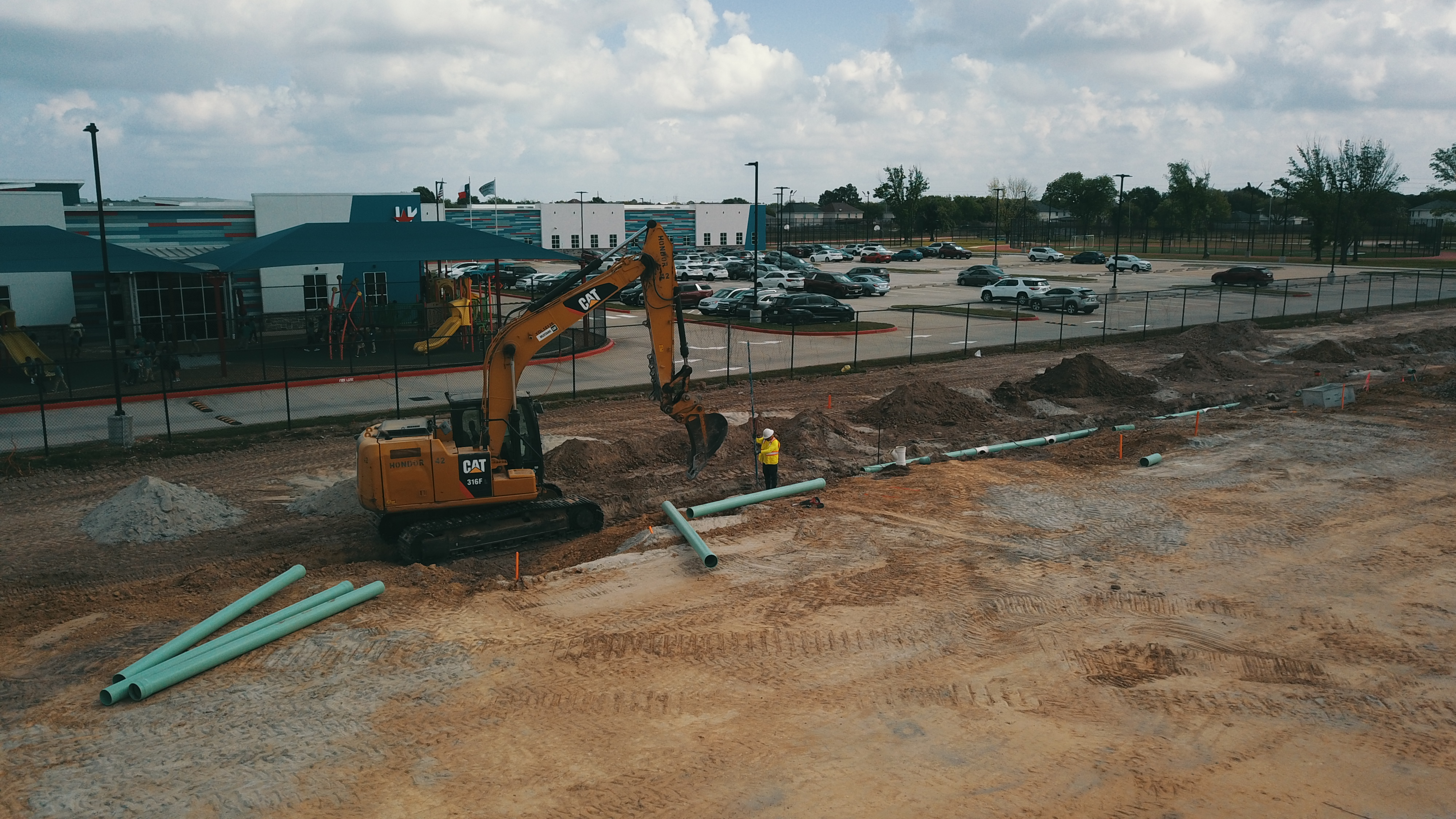
Site Work & Underground Utility Contractor in Houston, TX
Everything below the slab and outside the building line — installed by our own crews, on our own equipment, to our own schedule.
Site work is where commercial schedules are won or lost. Everything vertical waits on the pad, and the pad waits on utilities, drainage and grading being right the first time. Most general contractors sub this scope out and inherit whatever schedule the utility contractor gives them.
We self-perform it. Our own crews, our own excavators and haul trucks, our own layout. That means the site package is sequenced against the building schedule rather than negotiated around someone else’s backlog, and when a conflict shows up in the field — an unmarked line, a soft spot, a grade that doesn’t match the civil set — the people who can solve it are already on site.
The scope runs from the first cut of dirt to a paved, drained, utility-served pad ready for foundations.
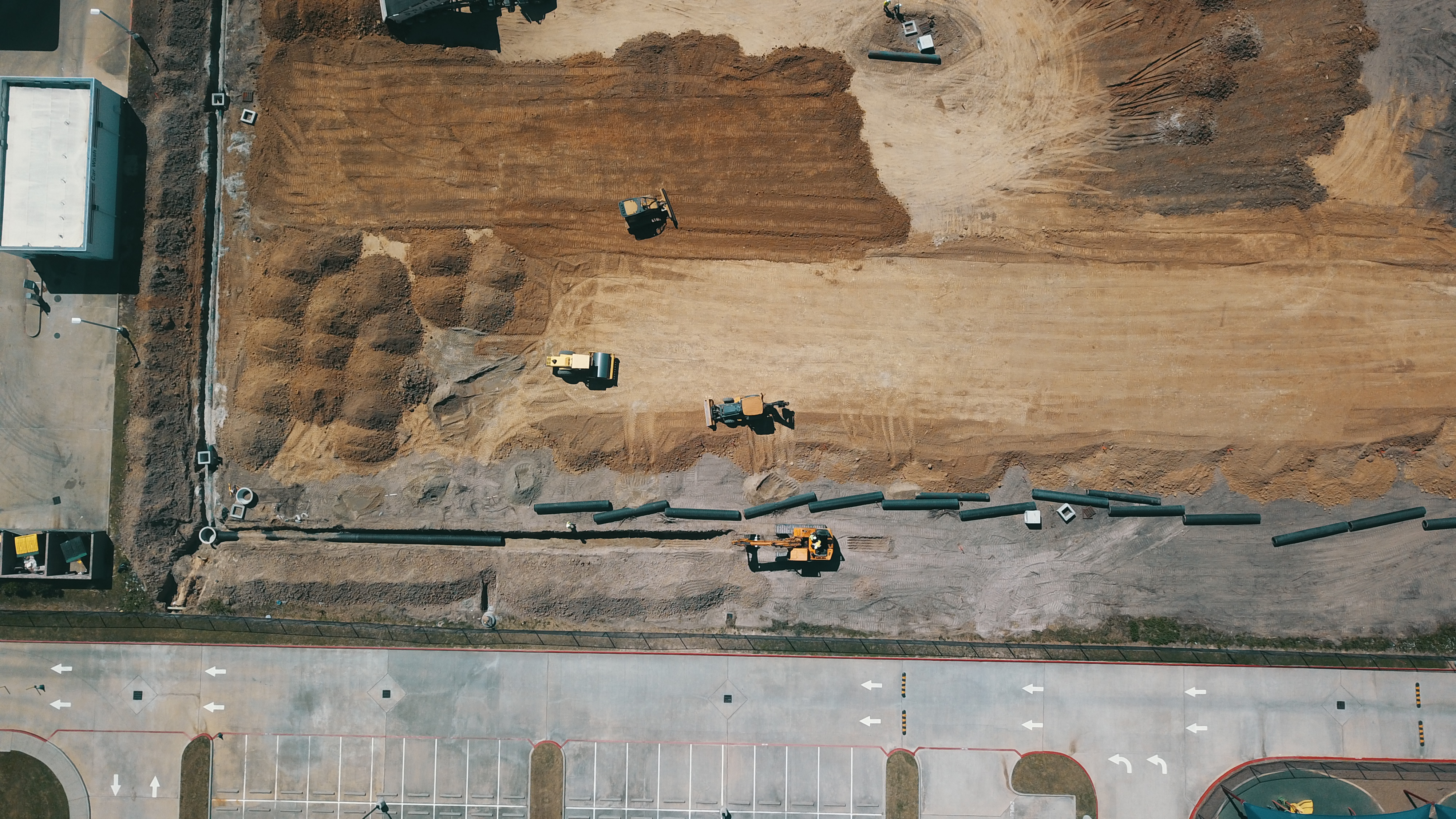
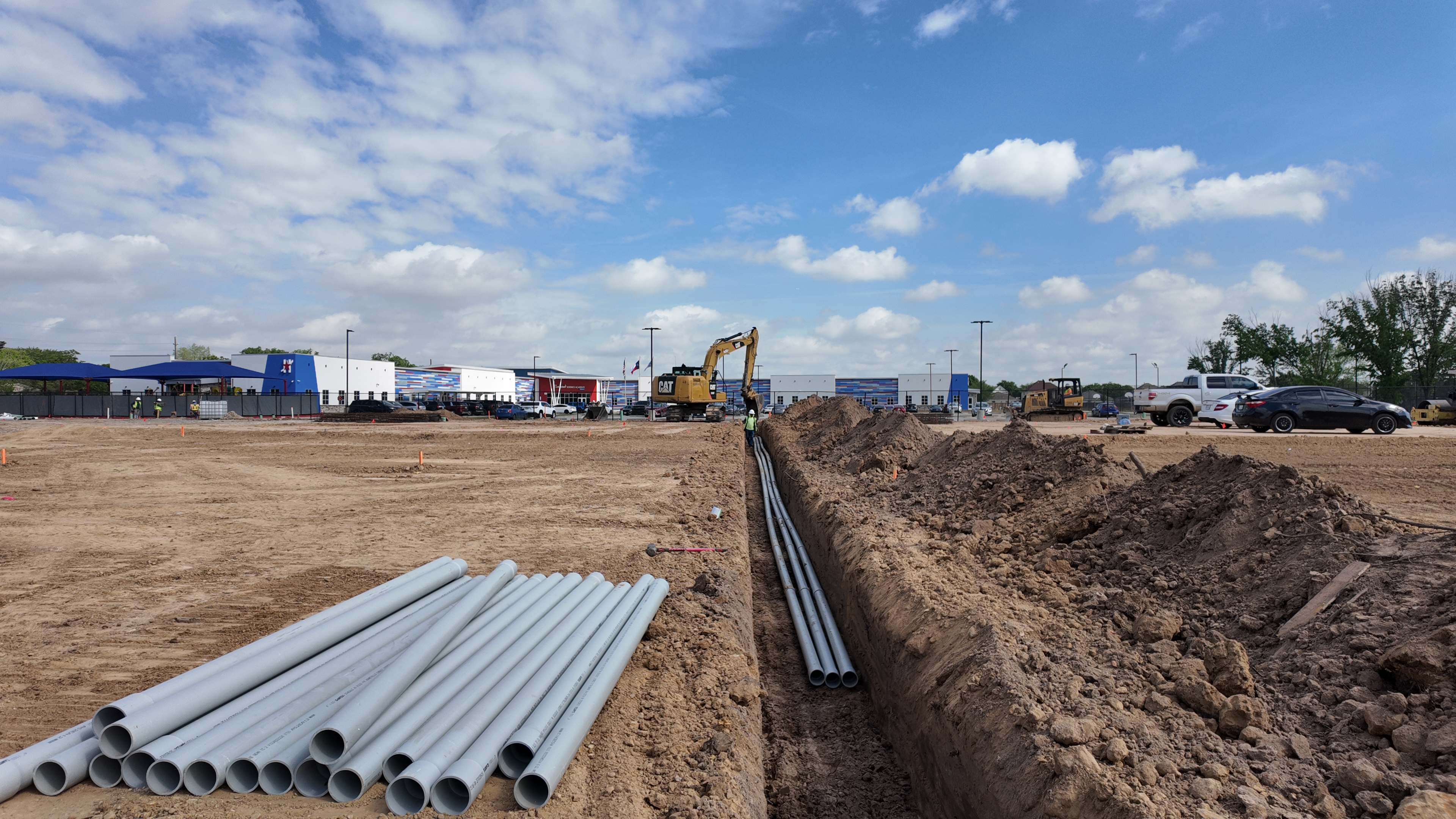
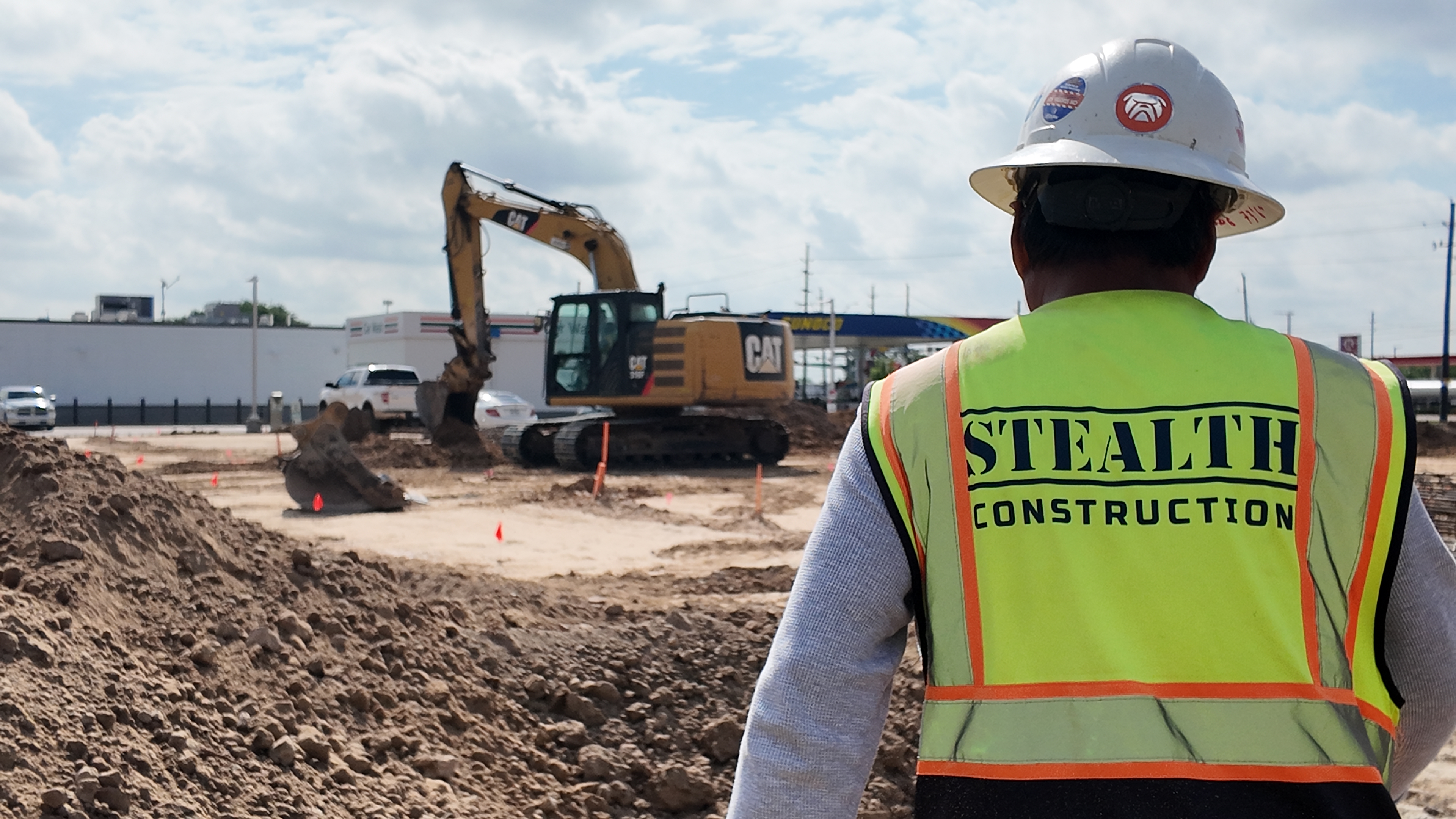
See the work
What's included
Underground utilities
- Water distribution and domestic service
- Sanitary sewer, lift stations and force main
- Storm sewer, inlets and outfall structures
- Fire lines and hydrant assemblies
- Site electrical and low-voltage conduit
Earthwork & grading
- Clearing, stripping and demolition
- Cut and fill, mass excavation
- Building pad construction and proof-rolling
- Fine grading to civil tolerance
- Erosion control and SWPPP measures
Drainage & paving
- Detention and retention ponds
- Underground detention systems
- Asphalt paving and overlay
- Concrete paving, curb and gutter
- Sidewalks, ADA ramps and striping
Fuel systems
- Fuel tank excavation and setting
- 40,000-gallon underground storage systems
- Product line and dispenser rough-in
- Canopy foundations and conduit
- Containment and monitoring provisions
Built for Gulf Coast soil and Gulf Coast rain
Greater Houston builds on expansive clay with a shallow water table, and the region’s rainfall means drainage design carries more weight here than it does almost anywhere else in the country. A detention calculation that pencils on paper still has to be built into ground that moves.
That shapes how we sequence: proof-roll before anyone commits to a pad elevation, get storm and detention in early so the site can shed water during construction rather than turning into a bog after the first serious rain, and keep the erosion-control measures current instead of installing them once and forgetting them.
It also shapes what we own. Dewatering, trench safety and haul capacity are the three things that most often stall a Houston site package, so we carry them in-house rather than renting them when it is already too late.
Where site work meets the building
The handoff between site and structure is the most common place for a commercial schedule to slip — underground stubbed in the wrong place, a pad that doesn’t hold elevation, a fire line that misses the riser room by four feet.
Because we also self-perform concrete, structural and MEP, that handoff is internal. The crew setting underground plumbing is working from the same coordinated model as the crew forming the foundation, and a conflict gets resolved between two of our own superintendents instead of through an RFI and a change order.
Our process
- Step 01
Survey & layout
Control established, existing utilities located and verified against the civil set before anything is opened up.
- Step 02
Clear, strip & rough grade
Site cleared, topsoil stripped and stockpiled, mass excavation to subgrade with erosion control in place.
- Step 03
Wet utilities
Storm, sanitary and water installed and tested from the deepest run up, so no line is ever dug across a finished one.
- Step 04
Detention & drainage
Ponds or underground systems built early so the site drains itself through the rest of construction.
- Step 05
Pad & proof-roll
Building pad constructed, compacted and proof-rolled with testing documentation before foundations start.
- Step 06
Paving & finish grade
Base, paving, curb, walks and striping — usually staged so the building can be worked while drives go in.
Common questions
Do you self-perform underground utilities, or subcontract them?
We self-perform. Water, sanitary, storm, fire line and site electrical conduit are installed by our own crews on our own equipment. That is the main reason our site packages hold schedule — the work is sequenced against the building, not against a subcontractor’s backlog.
Can you take a site from raw dirt to a finished pad?
Yes. Clearing, demolition, mass earthwork, all wet and dry underground, detention and drainage, pad construction with proof-roll documentation, and paving are all in scope. On most of our projects we then continue vertical with the same team.
Do you handle fuel systems for c-stores and truck stops?
Yes — tank excavation and setting, underground storage up to 40,000 gallons, product lines, dispenser rough-in and canopy foundations. Fuel and c-store sites are one of our core market segments.
What area do you cover?
Greater Houston and the surrounding Gulf Coast, with crews working across Texas on larger packages. Our office is in Richmond, TX.
Related services
Dirt Hauling & Earthwork
Fleet-backed hauling, cut and fill, and material supply — with the trucks we own, on the schedule we set.
Concrete & Structural
Foundations, slabs, structural concrete, masonry and steel — formed, poured and erected by in-house crews.
Design-Build
One contract from concept to keys — civil engineering, permitting, estimating and value engineering under one roof.
Need site work & utilities in Houston?
Tell us about the project and we'll come back with a real scope and a real number.