
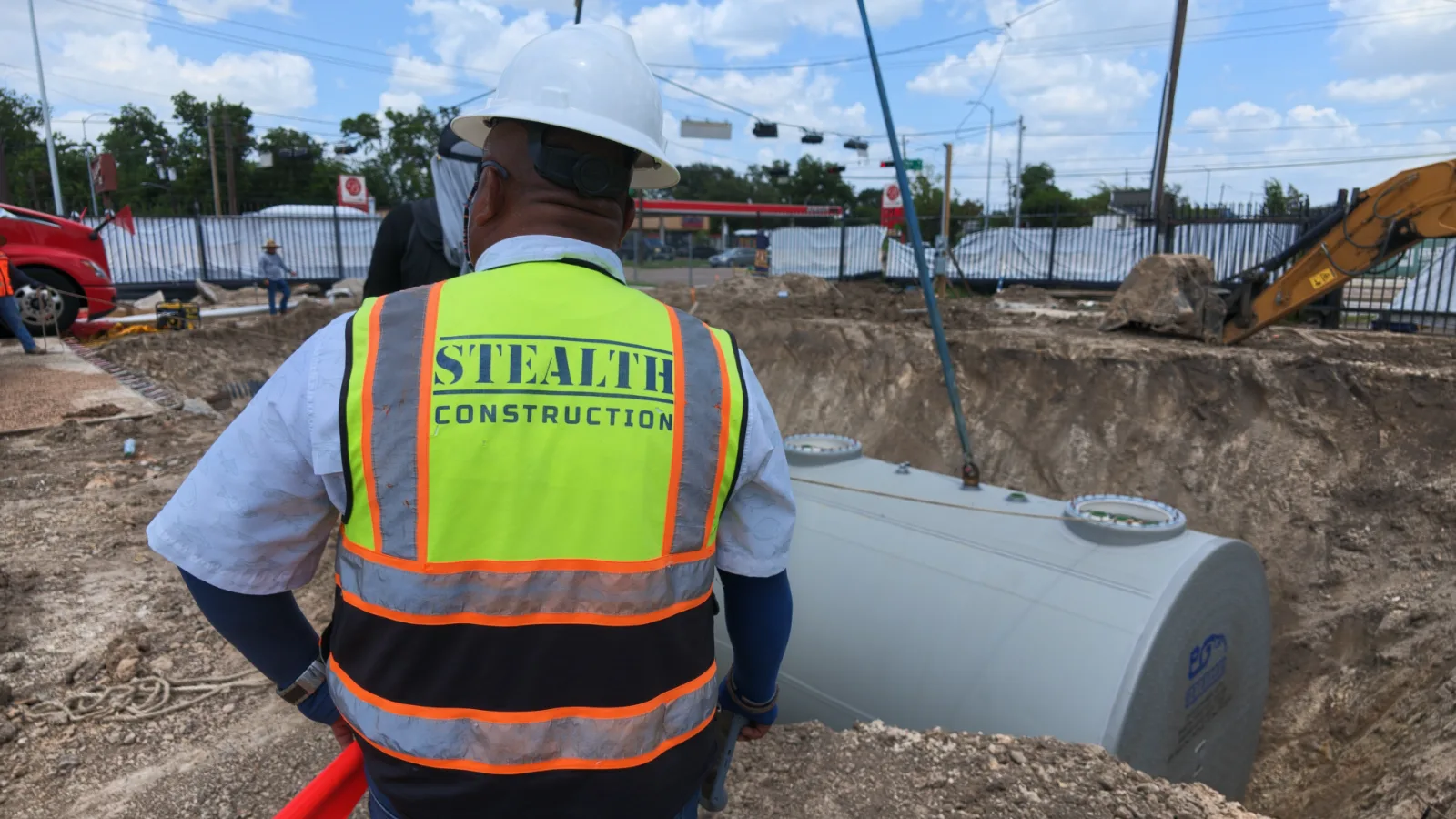
Turnkey Fuel Station Construction & Fuel Tank Installation in Houston, TX
From the first bucket of dirt to the first gallon sold — tanks, piping, dispensers, canopy and signage, all under one contractor.
A fueling site is several projects stacked on top of each other: a deep excavation, a regulated petroleum storage system, a forecourt that has to carry fuel trucks and eighteen-wheelers, a canopy structure, an electrical system feeding pumps and signs, and a building that has to open on the same day. Most owners end up managing four or five contractors to deliver it — and the gaps between them are where fuel projects lose months.
We deliver the whole thing. Our crews dig the tank hole and set the tanks, run the product piping and conduit, build the islands and forecourt paving, erect the canopy, install the dispensers and price signs, and build the c-store or travel center beside it. One contractor, one schedule, one point of accountability from groundbreaking to the first fuel delivery.
We build new fuel stations, c-stores, truck stops and travel centers, fleet fueling sites, and tank and dispenser replacements at existing stations across Greater Houston and Texas.
What's included
Excavation & tanks
- Tank pit excavation, dewatering and shoring
- Underground storage tanks (USTs) up to 40,000 gallons
- Double-wall fiberglass and steel tanks, single and compartment
- Aboveground storage tanks (ASTs) for fleet and backup fuel
- Hold-down slabs, deadmen, backfill and tank-top slabs
Fuel system
- Double-wall product, vent and vapor piping
- Submersible turbine pumps and tank-top sumps
- Under-dispenser containment, spill buckets and overfill prevention
- Automatic tank gauging and leak detection
- Testing, commissioning and start-up
Forecourt & canopy
- Fuel islands, bollards and dispenser installation
- Auto and high-flow diesel truck lanes, DEF
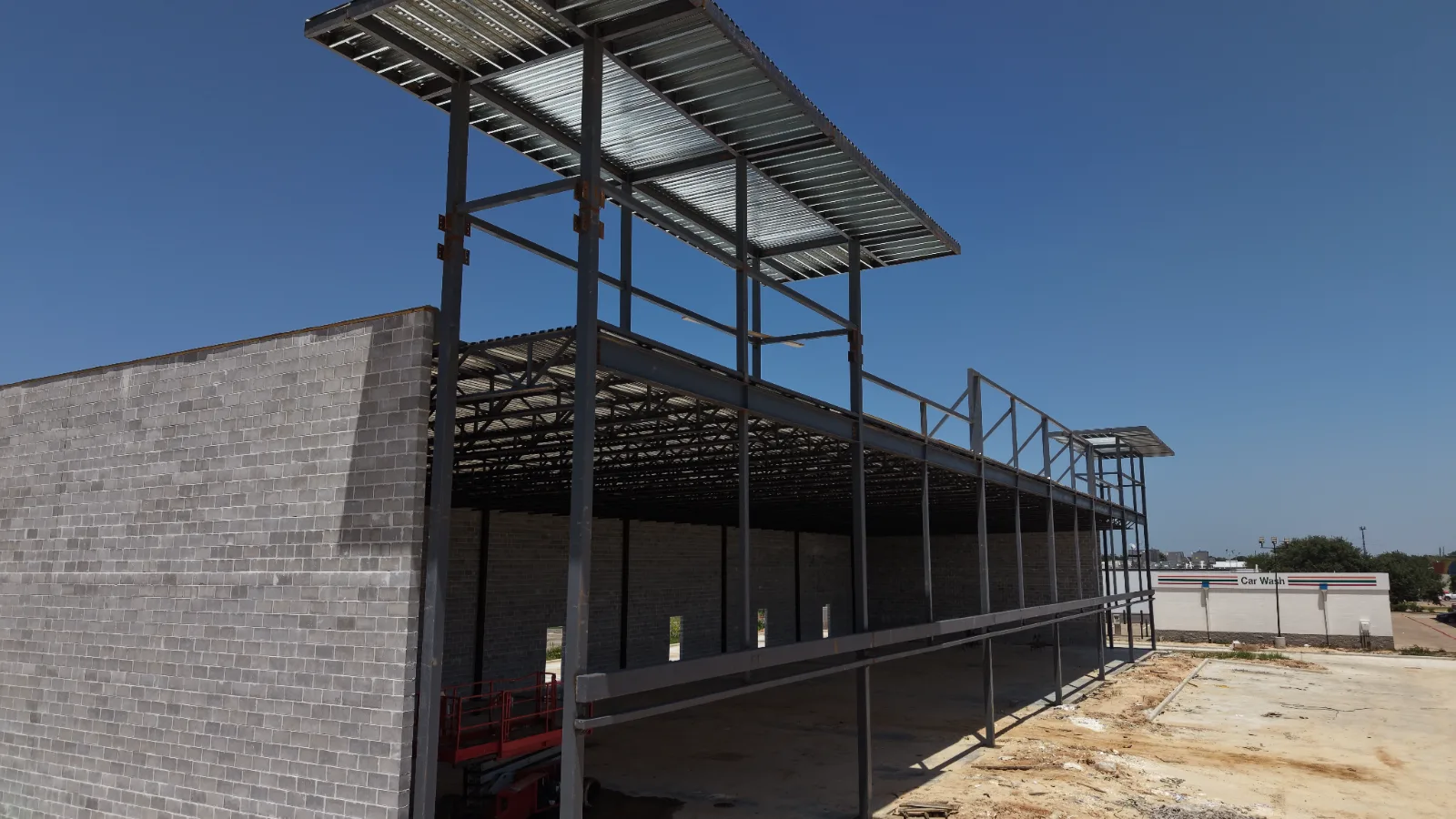
- Canopy foundations, steel, decking and fascia
- Canopy lighting and branding packages
- Heavy-duty concrete and asphalt forecourt paving
Signage, power & building
- LED fuel price signs and pylon signs
- Electrical service, dispenser power and data conduit
- Emergency shutoffs and site lighting
- C-store, travel center and car wash buildings
- Tank and dispenser replacement at existing stations
Truly turnkey — not a general contractor managing fuel subs
Fuel-system companies install tanks and dispensers but rarely build the site around them. General contractors build the store but sub the fuel work out. Either way, the owner ends up coordinating the handoffs — and the tank hole, the conduit runs, the island forms and the canopy footings all depend on each other.
We self-perform the dirt, the concrete, the underground and the vertical, so those dependencies stay inside one schedule. Canopy footings are poured with the islands, dispenser conduit goes in before the forecourt is paved, and the price sign foundation is set while the site electrical is still open. Nothing waits on another company’s crew.
Tank installation on the Gulf Coast
Setting a 40,000-gallon tank in Houston means digging a deep pit into clay with a shallow water table. The hole has to be dewatered and kept stable, the tanks have to be anchored against buoyancy so groundwater cannot float them, and the backfill has to be placed exactly to the manufacturer’s requirements to protect the tank walls.
That work is heavy civil, and it is the core of our site work division: our own excavators, our own haul trucks, and crews who handle deep excavation and dewatering on every kind of project. The fuel system that goes into the pit is installed and tested to the manufacturer’s instructions and Texas rules before anything is backfilled.
Built to TCEQ petroleum storage tank rules
Underground fuel storage in Texas is regulated by the TCEQ under 30 TAC Chapter 334. The TCEQ must be notified at least 30 days before tanks or piping are installed or replaced, tank installation work must be performed by a TCEQ-registered contractor under a TCEQ-licensed on-site supervisor, and new tanks must be registered once fuel is first placed in them.
New systems must have secondary containment — double-walled tanks and piping and containment under the dispensers — with interstitial monitoring for release detection, plus spill and overfill prevention. We build every system to those requirements, coordinate the notifications, inspections and testing, and hand over the records the owner needs to register the tanks and operate the site.
Truck stops, travel centers and fleet fueling
Truck stops add another layer: separate auto and diesel islands, high-flow truck dispensers, DEF, turning radii for tractor-trailers, and pavement sections that can carry them. Fleet sites often call for aboveground tanks with their own containment and registration requirements.
These are among the project types we build most often. Site circulation, fuel island layout and heavy-duty paving are planned together, so a truck can pull in, fuel and leave without crossing the passenger-car lanes.
Our process
- Step 01
Site & system planning
Tank sizes, island count, canopy, truck circulation and sign placement planned against the site and the brand standard.
- Step 02
Permits & notifications
Building and sign permits filed, and TCEQ construction notification made at least 30 days before tank work begins.
- Step 03
Excavate & set tanks
Tank pit dug, dewatered and shored; tanks set, anchored, tested and backfilled to the manufacturer’s specification.
- Step 04
Piping, conduit & islands
Product piping, sumps, electrical and data conduit installed and tested, then islands and canopy footings poured.
- Step 05
Canopy, dispensers & signs
Canopy erected, dispensers and tank monitoring installed, price and pylon signs set and wired.
- Step 06
Test, commission & open
Systems tested and commissioned, records handed over for tank registration, and the site ready for its first fuel drop.
Common questions
Do you build the entire fuel station or just install the tanks?
Both. We can deliver a complete turnkey site — excavation, tanks, piping, dispensers, canopy, price signs, paving and the store — or take on just the fuel system or a tank replacement on an existing site.
What size fuel tanks do you install?
We install underground storage tanks up to 40,000 gallons, including double-wall fiberglass and steel tanks and compartment tanks that store more than one fuel grade, as well as aboveground tanks for fleet and backup fueling.
Who handles TCEQ notification and permitting?
We do. TCEQ must be notified at least 30 days before tanks or piping are installed or replaced. We coordinate that notification along with building, sign and electrical permits and the required inspections, and provide the documentation the owner needs to register the tanks.
Can you replace tanks or dispensers at a station that is already open?
Yes. Tank, piping and dispenser replacements are phased to keep as much of the site operating as possible, and existing canopies are often retained.
Do you install canopies and fuel price signs?
Yes. Canopy foundations, steel, fascia and lighting, LED price signs and pylon signs are all part of our turnkey scope — the foundations and conduit go in with the rest of the site work rather than being retrofitted.
Do you build truck stops and fleet fueling sites?
Yes. Truck stops and travel centers — with high-flow diesel lanes, DEF and heavy-duty paving — and fleet fueling sites with aboveground tanks are a core part of our work.
Related services
Site Work & Utilities
Water, sewer and storm, earthwork, detention, paving and fuel systems — the dirt-to-pad scope, self-performed.
Signage & Interiors
Pylon and building signage plus white-box to turn-key interior finishes — the last scope before the doors open.
Asphalt Paving
Parking lots, drive lanes and heavy-duty truck paving — stabilized subgrade to final stripe, on Houston clay.
Need fueling & tank installs in Houston?
Tell us about the project and we'll come back with a real scope and a real number.